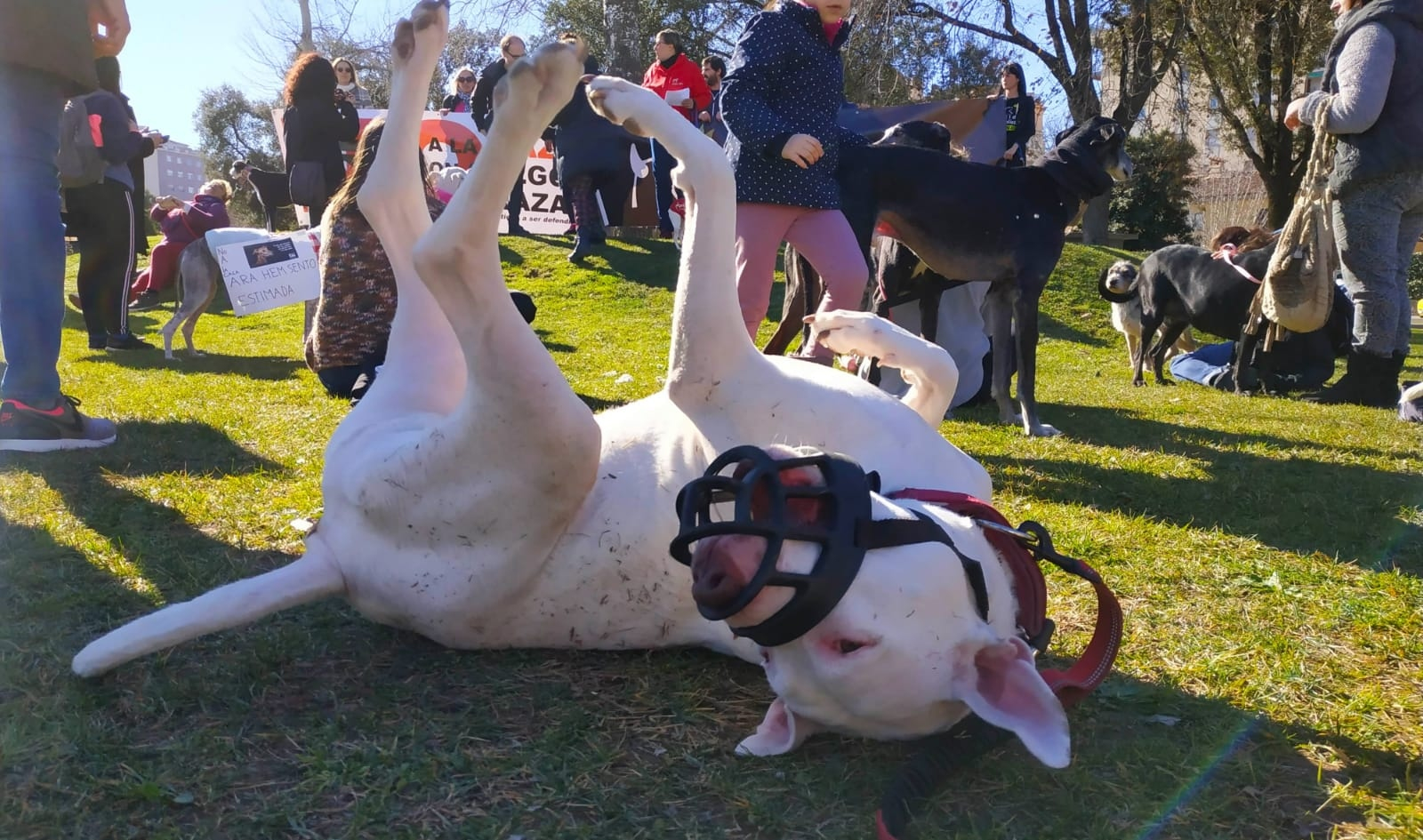
<p>If you have a dog considered a PPP or you want to adopt one, you need to get your license for the possession and driving of dogs considered potentially dangerous. It is a cumbersome procedure, which requires a lot of documentation and which leads to many doubts about it. Here we will inform you of the requirements and the documentation you must provide in order to obtain it.</p><p><br></p> <p>You must be aware that <strong>every 5 years this license must be renewed</strong>, and to renew it you will have to submit all the documentation again.</p> <p><br></p><p>There are two regulations that regulate this issue at the state level: Royal Decree 287/2002, of 22 March, which develops Law 50/1999, of 23 December, on the legal regime for the possession of potentially dangerous animals. At the regional level, each autonomous community has its own regulations, and each municipality also regulates them in its own way.</p><p><br></p> <p>The licence is granted to us by the local administration, that is, the City Council of the municipality where you reside. This is where you should go to be informed of the requirements and the documentation that must be provided. As it has different regulations according to the autonomous communities and municipalities, it can vary slightly from one town to another.</p><p><br></p> <h3><strong>In general, the requirements that we must meet are:</strong></h3> <ul><li>Be of legal</li> age <li>Not be convicted of crimes of homicide, injury, torture, against liberty or against moral integrity, sexual freedom and public health, association with an armed gang or drug trafficking, as well as not being proven by a court decision of the right to possess potentially dangerous animals.</li> <li>Not have been sanctioned for serious or very serious infringements with any of the ancillary sanctions provided for in section 3 of article 13 of Law 50/1999, of 23 December, on the legal regime of potentially dangerous animals.</li> <li>Have physical capacity and psychological aptitude for the possession of potentially dangerous animals.</li> <li>Have formalised civil liability insurance for damage to third parties with a coverage of no less than €120,000 (this amount varies in each autonomous community, in Catalonia it is: €150,253).</li></ul><p><br></p> <p>Written like this it seems easy, but it is not so easy, how do you prove that you meet the requirements?</p> <h3><strong>The documentation you must provide is as follows:</strong></h3><ul><li>DNI or passport of the applicant and its photocopy</li><li>Passport photograph* (according to the City Council)</li><li>Criminal record certificate: The issuance of this certificate involves a fee of € 3.74 and can be requested in 3 different ways:</li><li class="ql-indent-1">On-line: Through the electronic headquarters of the Ministry of Justice, in this way we will receive the certificate in approximately 24-72 hours</li>< class="ql-indent-1">In person: at the Territorial Offices of the Ministry of Justice or, only in the Autonomous Community of Madrid, also at the Central Citizen Information Office, where it is generally obtained immediately.</li> <li class="ql-indent-1">By post: By means of form 790, in this way it usually takes about 10 days but since it depends on the effectiveness of the postal mail, the period could be extended (we recommend that it can easily take 30-40 days)</li><li>Copy of the contracted policy of the civil liability insurance for damage to third parties and the receipt accrediting it. Many times home insurance can include the insurance of a pet at no additional cost or for a relatively low supplement, you should always contact the insurer to inform you of the type of animal, the microchip number that identifies it and that the policy covers the corresponding economic amount.</li> <li>Certificate of physical capacity and psychological aptitude (medical certificate): It is obtained in the same centres as the medical certificates for the car licence and each centre will have its own price rate.</li> <li>Photocopy of the health card or passport and the vaccinations of the animal.</li> <li>Proof of identification of the animal with microchip</li><li>Application for registration in the municipal animal census</li><li>Document of payment of the municipal public fee/price</li><li>Certificate that you have not been sanctioned for serious or very serious infringements (art. 13 Law 50/1999); In some town councils, an affidavit may be valid instead of the certificate.</li></ul> <p><br></p><h3>And now, if you already have everything, you can enjoy your dog considered potentially dangerous. Play with him a lot, pamper him and walk him a lot. If you have never had one before, you will realize how affectionate and good they can be if they are treated well.</h3> <p><br></p><p>To learn and read more about dogs considered potentially dangerous, browse these links:</p><ul><li><a href="https://www.escaudenpinxo.com/?m=blog&id=11805" rel="noopener noreferrer" target="_blank"><strong>What is a dangerous dog (GPP or PPP)?</strong></a> - Falls from Pinxo</li><li><a href=" https://www.facebook.com/notes/asociacion-nacional-de-formadores-y-adiestradores-caninos/el-miedo-tras-la-m%C3%A1scara-el-disparador-de-la-ley-ppp/1685447818217939/" rel="noopener noreferrer" target="_blank"><strong>The fear behind the mask</strong></a><strong> </strong>- Article on Facebook ANFAC (National Association of Canine Trainers and Trainers)</li><li><a href="https://avatma.org/2017/05/09/perros-potencialmente-peligrosos-ppp/" rel="noopener noreferrer" target="_blank"><strong>Potentially Dangerous Dogs</strong></a> - AVATMA article<</li><li>a href="http://faada.org/actualidad-1154-no-somos-peligrosos" rel="noopener noreferrer" target="_blank"><strong>#NoSomosPeligrosos</strong></a> - Collection of FAADA signatures to try to change the regulations</li></ul><p><br></p><p><br></p><p><br></p><p><br></p>
Go back to news